
Georgia’s historical sites are not just scenic stops; they trace the country’s story from ancient cave cities and early Christian monuments to mountain defense towers and medieval royal centers.
This plan focuses on heritage-rich places across the country of Georgia, with practical timing, access, dress-code, transport, and ticket notes so travelers can build a realistic history-focused route.
Svetitskhoveli Cathedral and Jvari Monastery, Mtskheta
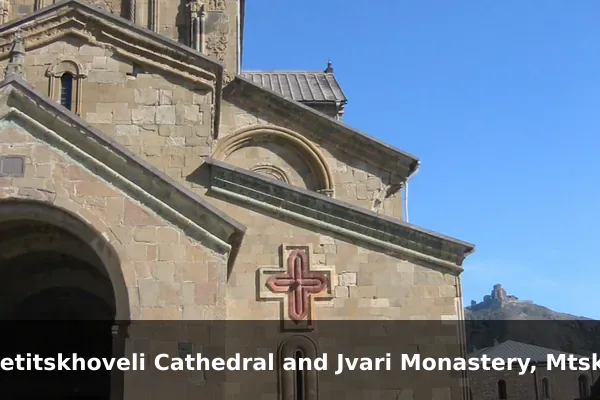
Mtskheta, Georgia’s ancient royal and spiritual capital, sits at the confluence of the Mtkvari and Aragvi rivers just a short drive north of Tbilisi, and its two landmark churches form part of the UNESCO-inscribed Historical Monuments of Mtskheta. Svetitskhoveli Cathedral is traditionally revered as the burial place of Christ’s robe and the mother church of Georgian Orthodoxy, while the sixth-century Jvari Monastery crowns a nearby hilltop where Saint Nino is said to have raised the first wooden cross, making the pair central to understanding how Christianity shaped Georgian identity.
Inside Svetitskhoveli, visitors can study weathered frescoes, royal tombs of the Bagrationi dynasty, and finely carved stonework framing the central nave, then walk the cobbled old town for craft shops, wine cellars, and small museums interpreting Mtskheta’s archaeology. A short drive up to Jvari rewards travelers with sweeping views over the river confluence and the cathedral below, alongside a quiet, austere interior whose proportions influenced later Georgian church architecture across the Caucasus.
Travel tip: Visit both sites with a driver or organized day trip from Tbilisi, and bring modest clothing for cathedral entry.
Best time to visit: Spring or autumn on a weekday morning, ideally before tour buses arrive around mid-morning.
Ticket price: Free entry to the main churches; guided tours or nearby museum visits may cost extra.
Uplistsikhe Cave Town
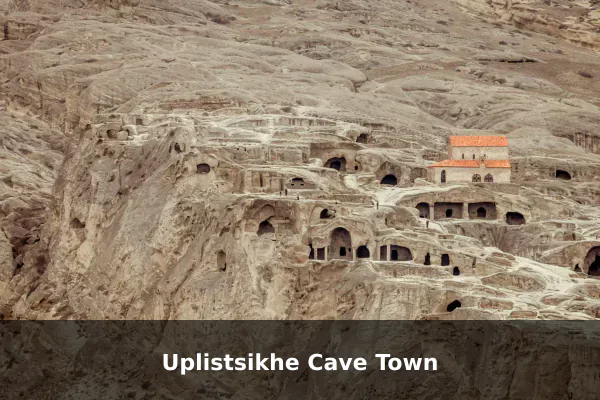
Uplistsikhe Cave Town is one of the oldest urban settlements in the Caucasus, carved directly into a rocky ridge above the Mtkvari River near Gori. Long predating Georgia’s Christian era, it served as a pagan religious center and a key stop along trade routes linking Asia and Europe, offering a rare window into how people lived, worshipped, and traded in the region thousands of years ago.
Visitors can wander through chambers, halls, wine cellars, and ceremonial spaces hewn into the stone, including a large pre-Christian temple area and a later Christian basilica that reflect the site’s long layered history. Climbing to the upper terraces rewards travelers with sweeping views over the river valley, while informational panels and local guides help bring the daily routines of its former residents to life.
Travel tip: Wear shoes with grip because the carved rock paths can be dusty, uneven, and slippery after rain.
Best time to visit: April to June or September to October, early morning or late afternoon to avoid heat and glare.
Ticket price: Adult entry is commonly listed around 15 GEL; guide, audio guide, and shuttle services cost extra.
Vardzia Cave Monastery
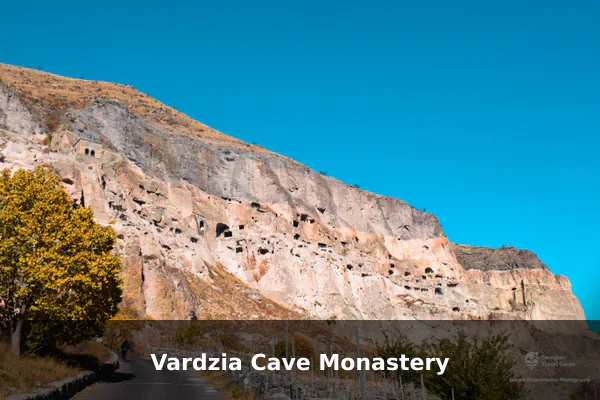
Carved into the cliffs of Erusheti Mountain above the Mtkvari River, Vardzia is one of Georgia’s most striking medieval monuments and a powerful symbol of the country’s Golden Age. Commissioned in the 12th century under Queen Tamar, the complex once held hundreds of rooms across multiple levels and served as both a spiritual refuge and a defensive stronghold against Mongol incursions, giving visitors a rare window into Georgia’s religious and political ambitions of that era.
Visitors can wander through tunnels, chapels, refectories, and wine cellars hewn directly from the rock, with the Church of the Dormition standing out for its well-preserved 12th-century frescoes, including a depiction believed to portray Queen Tamar herself. Narrow passageways and stairways connect the surviving tiers, and viewpoints along the way reveal sweeping panoramas of the river valley below, making the climb as rewarding for the landscape as for the history.
Travel tip: Bring water and use the site shuttle if available, as the climb through the cave levels is exposed and tiring in summer.
Best time to visit: May to June or September to October, with morning visits best for cooler temperatures.
Ticket price: Adult entry is commonly listed around 15 GEL; guide, audio guide, virtual tour, and shuttle fees may be separate.
Gelati Monastery
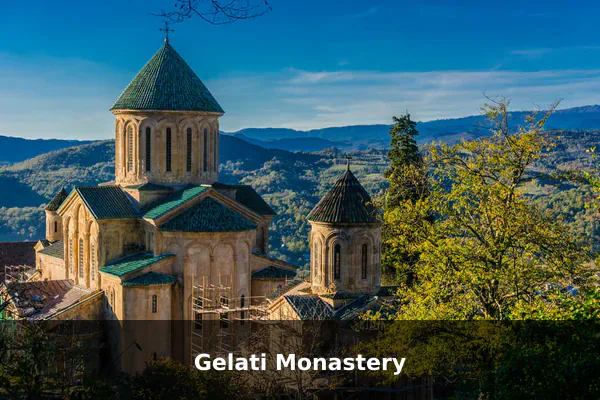
Gelati Monastery, founded in 1106 by King David IV the Builder near Kutaisi, stands as one of medieval Georgia’s most important spiritual and intellectual landmarks. Inscribed on the UNESCO World Heritage list, it once housed the Gelati Academy, a renowned center of philosophy, science, and theology that shaped Georgian culture for centuries.
Visitors can admire the well-preserved mosaics and frescoes inside the Cathedral of the Virgin, walk among the surrounding chapels and academy ruins, and take in sweeping views over the Tskaltsitela Valley. The hilltop setting also offers a quiet atmosphere for reflection, with informational panels and local guides helping explain the site’s layered history.
Travel tip: Check restoration or access updates before going, and dress conservatively because it remains a religious site.
Best time to visit: Spring or autumn, preferably weekday morning or late afternoon for softer light and fewer groups.
Ticket price: Usually free entry; donations may be welcomed and guided transport from Kutaisi is separate.
Chazhashi Village, Ushguli
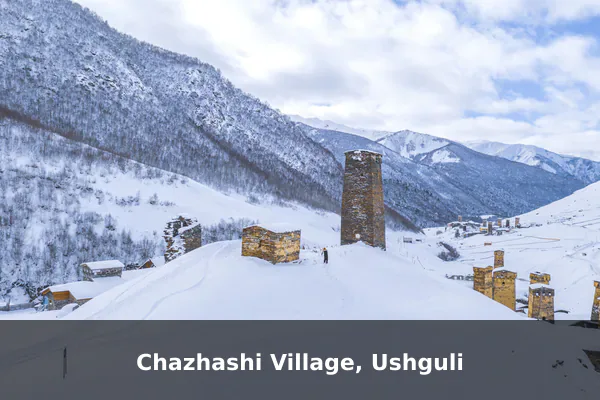
Chazhashi, one of four hamlets making up Ushguli in Upper Svaneti, sits at roughly 2,100 meters and is often described among the highest continuously inhabited settlements in Europe. Its dense cluster of medieval Svan tower-houses survives within the Upper Svaneti area inscribed by UNESCO for its remarkable mountain vernacular architecture, giving travelers a rare look at a fortified highland community shaped by centuries of clan life and isolation.
Visitors can wander stone lanes between leaning watchtowers, photograph Mount Shkhara on clear days, and step into the small Ethnographic Museum housed in a historic tower to see icons, manuscripts, and household objects from the region. Nearby chapels, working farmyards, and trailheads toward the Shkhara glacier add context to the landscape, while local guesthouses offer a chance to hear Svan traditions directly from residents.
Travel tip: Use a 4WD vehicle from Mestia and confirm road conditions locally, especially outside summer.
Best time to visit: June to September, during daylight hours when mountain roads are most reliable.
Ticket price: Village access is generally free; local museums, towers, or private guided visits may charge separately.
Ananuri Fortress Complex
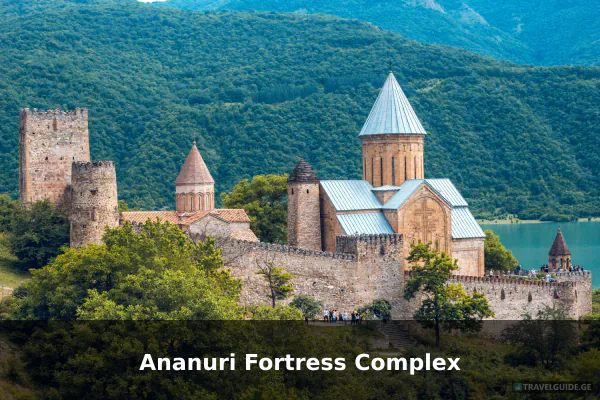
Ananuri Fortress Complex is one of the most photogenic historical stops on the Georgian Military Highway, perched above the turquoise Zhinvali Reservoir about an hour north of Tbilisi. The site preserves a walled medieval citadel of the Aragvi dukes, with stone towers and churches that reportedly date back to the 16th and 17th centuries, offering a compact look at Georgia’s feudal and ecclesiastical past in a single setting.
Inside the walls, visitors can climb the surviving defensive tower for sweeping lake views, step into the Church of the Assumption to study its carved facade and faded frescoes, and walk the ramparts to understand how the complex once controlled the Aragvi gorge. The viewpoint above the parking area is a popular photo stop, and small stalls near the entrance often sell churchkhela, honey, and woolen souvenirs from local vendors.
Travel tip: Go early if driving toward Kazbegi, because parking and roadside traffic can become crowded by midday.
Best time to visit: May to June or September to October, early morning on weekdays for the calmest visit.
Ticket price: Free entry; parking, toilets, or optional local guide services may cost extra.
Dmanisi Archaeological Site
Dmanisi Archaeological Site sits in southeastern Georgia and is internationally recognized for hominin fossils dated to roughly 1.8 million years ago, making it one of the most significant early human sites found outside Africa. The setting pairs this scientific importance with the atmospheric ruins of medieval Dmanisi, so a visit blends deep prehistory with later Georgian heritage in a single open landscape.
Visitors can walk marked paths across the excavation area, view protected dig zones where skulls and stone tools have been uncovered, and explore the adjacent medieval town remains, including the Dmanisi Sioni basilica. On-site interpretation panels and the small museum display help contextualize the finds, though hours and access can change, so confirming details with official Georgian heritage sources before traveling is advisable.
Travel tip: Pair the site with Dmanisi town by private car, as public transport connections can be limited for a same-day visit.
Best time to visit: Late spring to early autumn, preferably morning before the open terrain becomes hot.
Ticket price: Prices vary by site and museum access; confirm current fees before travel.
David Gareja Lavra Monastery
David Gareja Lavra Monastery is one of Georgia’s most atmospheric spiritual sites, a cave-monastery complex carved into arid hillsides near the Azerbaijani border that traces its origins to a 6th-century monastic founder. Its remote semi-desert setting, layered cell chapels, and surviving fresco fragments make it a rewarding stop for travelers interested in early Christian heritage and dramatic landscapes well beyond the usual Kakheti wine route.
Visitors typically explore the active Lavra courtyard at the base of the ridge, where monks still reside, and may walk up toward viewpoints overlooking the rolling steppe that stretches into Azerbaijan. The wider reserve is known for its rock-cut cells and historic wall paintings, and conditions can shift with weather and current access rules, so confirming open routes and any guide arrangements on arrival helps shape a realistic visit.
Travel tip: Stay on clearly open routes and ask locally about access, as some ridge areas near the border can be restricted.
Best time to visit: April to June or September to October, on dry weekdays when the unpaved approach is easier.
Ticket price: Some heritage-reserve tariffs may apply, often around 10 GEL; monastery access rules and guide fees can vary.
Gremi Archangels’ Complex
The Gremi Archangels’ Complex stands as one of Kakheti’s most evocative reminders of royal-era Georgia, marking the site of the kingdom’s former capital between the 16th and 17th centuries. Perched on a wooded hill above the Alazani Valley, its fortified church and bell tower offer a rare, well-preserved glimpse of how Georgian rulers fused defense, faith, and statecraft in a single compact citadel.
Visitors can step inside the Church of the Archangels to see fragments of original frescoes, then explore the small museum housed within the complex, which displays archaeological finds, royal-era artifacts, and exhibits on the destroyed lower town. Those who climb the adjoining tower are typically rewarded with sweeping views over the vineyards of Kakheti and the Caucasus foothills beyond.
Travel tip: Combine it with Telavi or Kvareli by car, and climb the tower only if you are comfortable with narrow stairs.
Best time to visit: April to June or September to November, late morning after nearby wineries and roads open fully.
Ticket price: Church grounds may be free; museum or tower access is commonly around 10 GEL for adults.
Narikala Fortress, Tbilisi
Narikala Fortress crowns the ridge above Old Tbilisi and remains one of the most evocative reminders of the city’s place along the historic Silk Road. Founded in roughly the 4th century and expanded under successive Persian, Arab, and Georgian rulers, its weathered stone walls frame sweeping views of the Mtkvari River, sulfur baths of Abanotubani, and the tightly packed rooftops that grew up around this strategic trade-route crossing.
Visitors can wander the surviving ramparts, step into the restored St. Nicholas Church inside the citadel, and trace the outline of towers that once guarded the caravan routes below. The hilltop also connects to the Mother of Georgia statue and the Botanical Garden gorge behind it, while the panorama over Old Tbilisi makes it easy to pick out landmarks such as the Metekhi Church, Peace Bridge, and the domes of the historic bathhouse quarter.
Travel tip: Walk down through the old lanes after visiting, but use the cable car or a taxi uphill if the weather is hot.
Best time to visit: Late afternoon year-round for cooler temperatures and city views, avoiding icy paths in winter.
Ticket price: Fortress entry is free; the Rike Park cable car is paid separately and fares can change.
Official references
- Georgian National Tourism Administration – Georgia Travel – Official tourism board for the country of Georgia; useful for destination pages, travel recommendations, access notes, and visitor-facing descriptions of historical sites such as Mtskheta, Uplistsikhe, Vardzia, and Ananuri.
- National Agency for Cultural Heritage Preservation of Georgia – Primary government cultural heritage authority for the country of Georgia; useful for verifying monument status, preservation context, and official heritage information.
- UNESCO World Heritage Centre – Georgia – Primary international reference for Georgia's UNESCO-listed and tentative heritage sites, including Historical Monuments of Mtskheta, Gelati Monastery, and Upper Svaneti.
- Georgian National Museum – Official museum network for archaeological, historical, and cultural collections; useful for historical fact-checking and current museum visitor information.
- Explore Georgia – History & Heritage – Official tourism source for the U.S. state of Georgia; useful if the article is about Georgia, USA, with attraction listings, visitor details, and heritage travel ideas.
