

Saint Lucia is best known for its dramatic Piton peaks and rainforest-fringed beaches, but the island’s cultural soul runs just as deep. From colonial-era forts and a Nobel laureate’s namesake square to bustling Creole markets and heritage plantations, the island offers travelers a layered story of Indigenous, French, British, and African influences. Exploring these cultural landmarks rewards visitors with a richer understanding of how Saint Lucia’s traditions, language, faith, and folk arts came to be.
This guide highlights ten of the island’s most meaningful cultural sites and experiences, spread across Castries, Gros Islet, Soufrière, and the surrounding hills. For each landmark you’ll find a practical visiting tip, guidance on the best time to go, and a note on likely ticket costs. Because hours, fees, and rules can change, always confirm the latest details with the Saint Lucia Tourism Authority or the Saint Lucia National Trust before you set out.
Pigeon Island National Landmark, Gros Islet
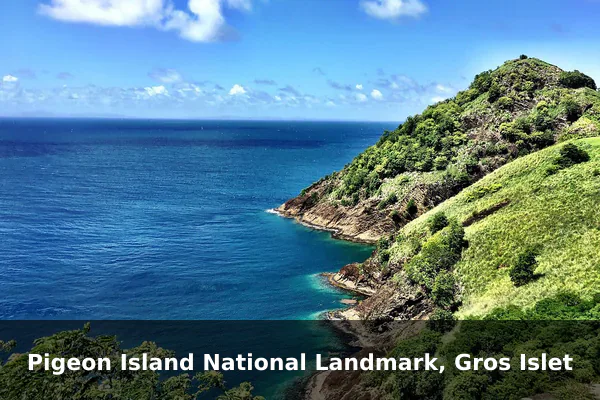
Pigeon Island National Landmark is one of Saint Lucia’s most rewarding heritage sites, pairing layered military history with some of the finest coastal scenery on the island. Once a strategic British naval base, the restored 18th-century complex preserves stone forts, barracks ruins, and gun batteries that trace centuries of Caribbean rivalry, all maintained under the care of the Saint Lucia National Trust.
Visitors can wander interpretive trails that connect the lower grounds to the hilltop ruins of Fort Rodney, where panoramic views stretch across Rodney Bay and toward neighboring Martinique on clear days. A small museum and interpretation centre add historical context, while the surrounding lawns and quiet beaches make it easy to combine sightseeing with a relaxed afternoon by the sea.
Travel tip: Wear sturdy shoes and bring water for the short but steep climb to Fort Rodney; arrive early to enjoy the trails before midday heat.
Best time to visit: Year-round; mornings on weekdays are quietest, and the dry season (December to April) offers the clearest hilltop views.
Ticket price: A modest entry fee applies (prices vary); confirm current rates with the Saint Lucia National Trust before visiting.
Derek Walcott Square, Castries
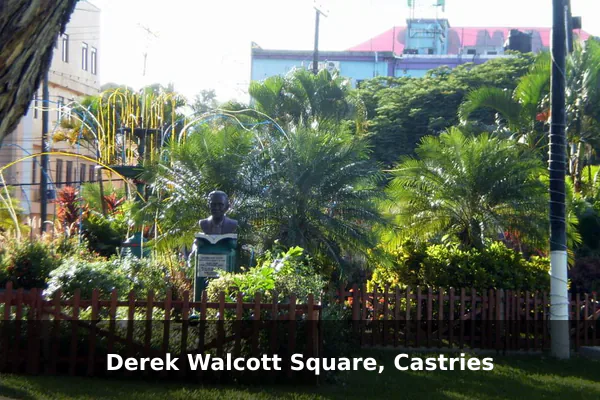
Derek Walcott Square sits at the heart of Castries and stands as a meaningful tribute to the island’s Nobel Prize-winning poet and playwright. The square anchors the city’s historic core, framed by colonial-era buildings and shaded by a towering samaan tree believed to be centuries old, offering a calm green space amid the bustle of the capital.
Here visitors can pause beside memorials honoring Walcott and other notable Saint Lucians, admire the surviving examples of French and British colonial architecture along its edges, and use the square as a natural starting point for exploring downtown Castries on foot. Local guides nearby can share stories about the poet’s legacy and the square’s role in the island’s civic life.
Travel tip: Combine your visit with a short self-guided walk of surrounding heritage buildings, and ask local guides about Walcott's legacy.
Best time to visit: Daytime hours, ideally mid-morning on weekdays when the square is calm and well lit for photos.
Ticket price: Free to enter as a public square.
Cathedral Basilica of the Immaculate Conception, Castries
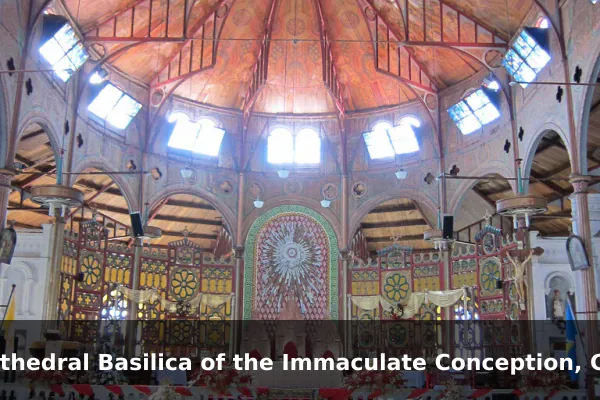
The Cathedral Basilica of the Immaculate Conception is the largest church in Saint Lucia and a centerpiece of religious and cultural life in Castries. It is best known for its richly painted interior, where vivid murals blend biblical narratives with distinctly Caribbean imagery, giving the sacred space a character that reflects the island’s own identity.
Inside, visitors can take in the colorful ceiling and wall paintings, the carved woodwork, and the warm light filtering through the windows, all of which reward a quiet, unhurried visit. As an active place of worship, the basilica also offers a glimpse into the devotional traditions that remain central to many Saint Lucian communities.
Travel tip: Dress modestly with shoulders covered, keep quiet during services, and ask permission before photographing the interior.
Best time to visit: Outside of Mass times; late morning on weekdays is usually peaceful for viewing the murals.
Ticket price: Free, though donations toward upkeep are appreciated.
Castries Central Market
Castries Central Market is a long-standing hub of everyday island life and one of the best places to experience Saint Lucian culture through its food and crafts. Generations of vendors have traded here, and the market’s covered halls remain filled with the colors, aromas, and energy that make it a genuine cultural landmark rather than a staged attraction.
Visitors can browse stalls piled with tropical produce, local spices, cocoa, and handmade crafts, then sample Creole street food prepared on the spot. It is also an ideal place to chat with vendors, pick up authentic souvenirs, and observe the social rhythms of the capital, especially when the market is at its liveliest.
Travel tip: Carry small cash, sample fresh spices and cocoa, and visit early when produce stalls are freshest and crowds are thinner.
Best time to visit: Saturday mornings are busiest and most vibrant; weekday mornings are calmer for relaxed browsing.
Ticket price: Free to enter; bring cash for purchases.
Morne Fortune and Fort Charlotte, Castries
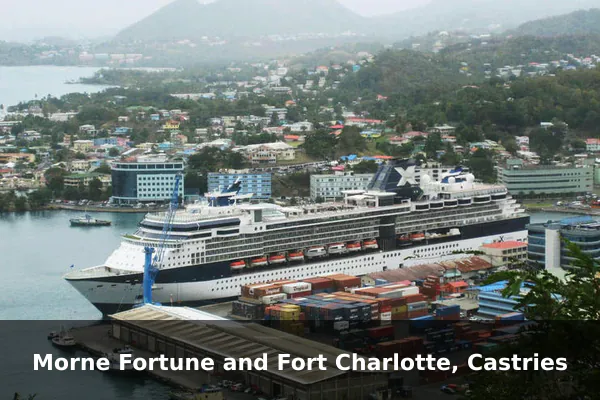
Morne Fortune, crowned by the remains of Fort Charlotte, is a historic hilltop district that overlooks Castries and its busy harbor. Fiercely contested between the British and French, the ridge preserves 18th-century fortifications, military ruins, and monuments that recall the island’s turbulent colonial past, making it a compelling stop for anyone interested in Saint Lucia’s history.
From the lookout points, visitors can take in sweeping views across the capital, the harbor, and the coastline beyond, while exploring old barracks, gun emplacements, and commemorative markers scattered across the grounds. The site combines open-air history with some of the most photogenic vantage points near the city.
Travel tip: Hire a local driver or join a guided tour, as the winding roads are steep; bring a hat and sunscreen for the exposed lookout points.
Best time to visit: Late afternoon for cooler temperatures and golden-hour views over Castries.
Ticket price: Grounds are generally free to explore; prices vary for any guided tours.
Folk Research Centre, Castries
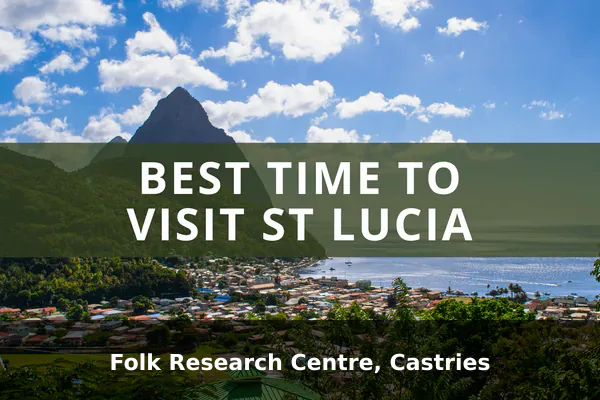
The Folk Research Centre is one of Saint Lucia’s most important cultural institutions, devoted to documenting and safeguarding the island’s Creole heritage. It matters because it holds rare records of Kwéyòl language, traditional music, oral folklore, and customary arts that might otherwise fade, making it a meaningful first stop for travelers who want to understand Saint Lucian identity beyond the beaches.
Visitors can explore archives, photographs, and exhibits on local music and storytelling, and during cultural festivals the Centre often hosts talks, workshops, and performances tied to Creole heritage. Because programming changes with the calendar, it is worth treating a visit as a chance to engage with living traditions rather than a fixed museum display.
Travel tip: Call ahead to confirm opening hours and any cultural programs or exhibitions on the day you plan to visit.
Best time to visit: Weekday business hours; check ahead for special events tied to cultural festivals.
Ticket price: Prices vary; some exhibits or programs may be free or request a small donation.
Soufrière Historic Town
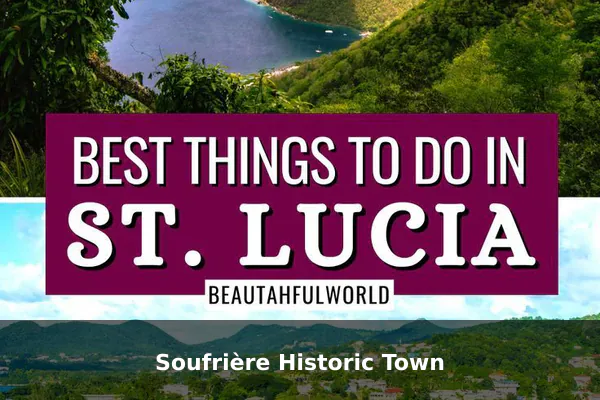
Soufrière is Saint Lucia’s oldest town and one of the most atmospheric places to experience the island’s layered colonial past. Founded under French rule, it preserves period architecture, a relaxed waterfront square, and a setting framed by the Pitons, making it both a cultural destination in its own right and the gateway to the island’s heritage heartland.
Wandering the streets on foot reveals weathered timber and stone buildings, small shops, and local life unfolding around the central square. From here visitors can easily branch out to nearby cocoa estates, botanical gardens, and the volcanic landscape, making the town a natural base for exploring southwestern Saint Lucia.
Travel tip: Explore on foot to appreciate the historic buildings, and pair your visit with nearby heritage estates and the Pitons.
Best time to visit: Morning hours before tour groups arrive; the dry season offers the most comfortable walking weather.
Ticket price: Free to wander the town; individual attractions charge separately.
Gros Islet Friday Night Street Party (Jump Up)
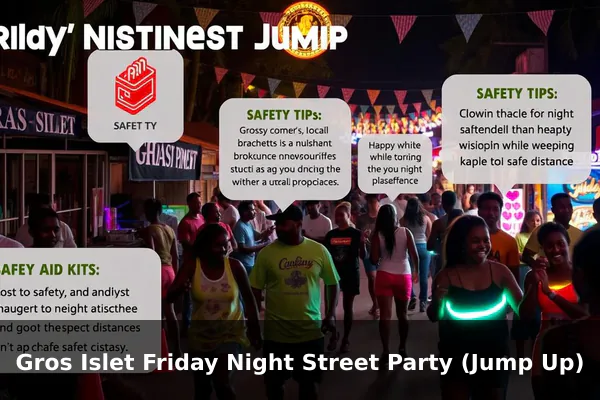
The Gros Islet Friday Night Street Party, known locally as the Jump Up, is a long-running weekly celebration that turns an ordinary fishing village into one of the island’s liveliest cultural gatherings. It is worth experiencing because it offers an unscripted look at community life, where residents and visitors mix over music, food, and conversation in the streets.
As the evening goes on, vendors fire up grills serving Creole staples like barbecued chicken and fresh seafood, while speakers fill the lanes with soca, reggae, and dancehall. Visitors can sample local dishes, dance with the crowd, and soak up an authentic neighborhood atmosphere that builds steadily after dark.
Travel tip: Bring small cash, keep valuables secure in the crowd, and arrange safe return transport in advance.
Best time to visit: Friday evenings, with the atmosphere building from after dark into the late night.
Ticket price: Free to join the street party; pay individually for food and drinks.
Fond Doux Heritage Cocoa Estate, Soufrière
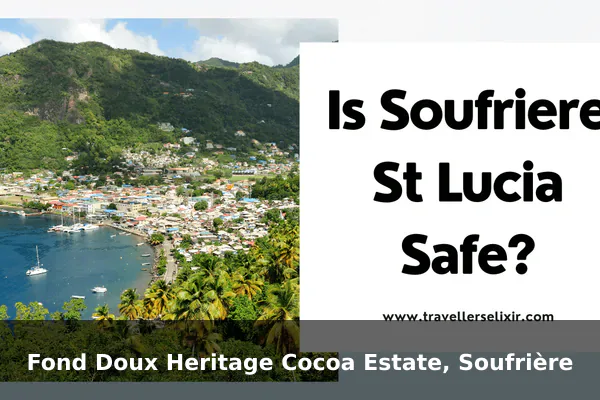
Fond Doux is a working historic estate near Soufrière that brings Saint Lucia’s plantation history and cocoa culture to life. It stands out because it remains a productive cocoa farm, allowing visitors to connect the island’s traditional estate economy with the chocolate-making process in an authentic, still-operating setting.
On a guided tour, visitors can walk the grounds among cocoa trees and tropical plantings, learn how beans are harvested, fermented, and dried, and in many cases take part in hands-on cocoa or chocolate demonstrations. The estate also offers a window into historic Saint Lucian estate life through its preserved buildings and surrounding gardens.
Travel tip: Book a guided plantation tour in advance and wear comfortable closed shoes for walking the grounds.
Best time to visit: Morning tours during the dry season offer cooler, drier conditions for walking.
Ticket price: Guided tours carry a fee (prices vary); confirm rates when booking.
La Sikwi Sugar Mill, Anse La Raye
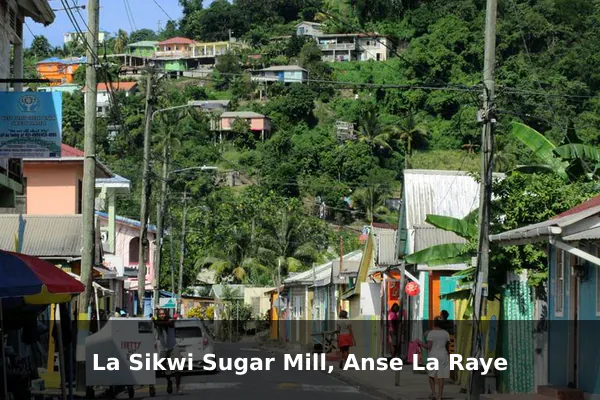
La Sikwi is a restored 19th-century sugar mill and estate near Anse La Raye that preserves a tangible piece of Saint Lucia’s plantation-era history. It appeals to travelers interested in heritage because the site links the island’s sugar industry past with its folk traditions, set within lush gardens away from the busier tourist circuits.
Visitors can view the historic waterwheel and mill machinery, stroll the surrounding grounds, and learn how sugar was once processed on the estate. The setting also occasionally hosts cultural performances and seasonal programs, giving guests a chance to pair the industrial heritage with local music and folklore.
Travel tip: Confirm opening times ahead of your visit, as access can depend on scheduled tours or events.
Best time to visit: Daytime hours; check in advance for any cultural performances or seasonal programs.
Ticket price: Prices vary; verify current entry or tour fees before arriving.
Official references
- Saint Lucia Tourism Authority (Official Tourism Board) – Official national tourism board with authoritative information on cultural landmarks, attractions, visitor logistics, and travel planning for Saint Lucia.
- Saint Lucia National Trust – Statutory body managing and conserving heritage sites and protected areas (e.g., Pigeon Island National Landmark), with official visiting hours, entry fees, and historical context.
- UNESCO World Heritage Centre – Pitons Management Area – Authoritative listing for Saint Lucia's UNESCO World Heritage Site (the Pitons), providing verified historical, cultural, and geographic significance.
- Government of Saint Lucia (Official Portal) – Official government portal for ministries (including culture and tourism) and accurate national-level information on heritage and public sites.
- Saint Lucia Ministry / Cultural Development Foundation – National cultural body responsible for heritage programming and cultural events; useful for accurate cultural context, though a confirmed official URL is not provided to avoid fabrication.
