
Trinidad and Tobago pairs the buzzing energy of the southern Caribbean with landscapes that beg to be photographed, from mirror-still mangrove channels and forested ridges to turquoise reef flats and dramatic Atlantic cliffs. For photographers, the twin islands offer remarkable variety within short distances: you can shoot a misty rainforest waterfall in the morning and frame a glowing coastal sunset by evening. This guide focuses on the scenic angle, highlighting where to point your lens, how the light behaves, and the practical logistics that make or break a shoot.
Each spot below is chosen for its photogenic character and realistic access, with notes on the best time to capture it, likely costs, and a practical tip drawn from how visitors actually reach and shoot these places. Because rules, prices, and opening hours can change, treat the details as planning guidance and confirm current conditions with official sources such as Tourism Trinidad, Tobago Beyond, and the Environmental Management Authority before you travel. Pack for humidity and sudden rain, protect your gear from sea spray, and always respect protected areas and local communities while you shoot.
Maracas Bay Lookout, North Coast Road (Trinidad)
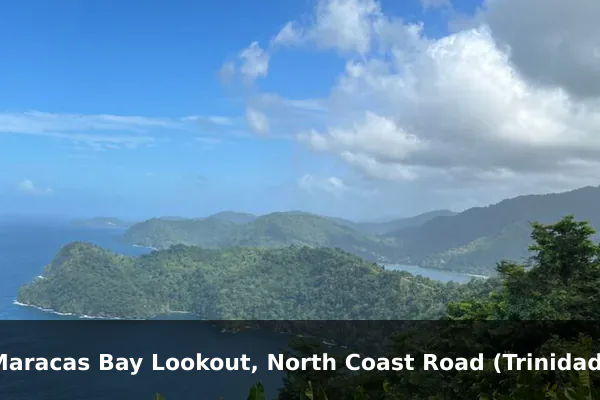
The lookout is the reward at the top of the winding North Coast Road, where the Northern Range opens onto a wide arc of palm-fringed sand and turquoise Caribbean water far below. It frames Maracas Bay in a single sweeping composition that has become the postcard image of Trinidad’s north coast, with forested headlands tumbling down to the shore on either side.
From the roadside bays you can shoot the full curve of the coastline, watch surf break against the headlands, and pick out fishing boats and bathers as tiny scale markers in the vast blue. Many travelers pair the stop with the descent to the beach below, famous for its bake-and-shark stalls, so you can scout the high view before photographing the sand at water level.
Travel tip: Drive yourself or hire a taxi for the winding North Coast Road and pull into the official lookout bays rather than stopping on blind curves.
Best time to visit: Late morning to early afternoon for bright blue water; the road is best driven in dry-season daylight (roughly January to May).
Ticket price: Free to stop at the roadside lookout; beach facilities and parking at Maracas may carry small separate fees.
Fort George Lookout (Port of Spain, Trinidad)
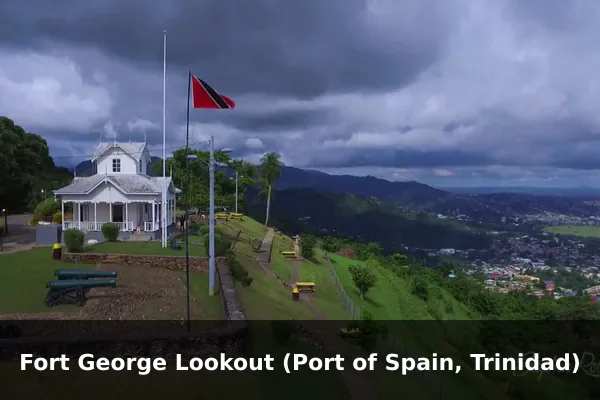
Perched on a hill above the capital, this restored colonial-era fort delivers one of the most complete panoramas in Trinidad, taking in the rooftops of Port of Spain, the shipping lanes of the Gulf of Paria, and on exceptionally clear days the distant outline of the Venezuelan coast. The elevation and historic stonework give photographers both a sweeping backdrop and foreground texture in the same frame.
Visitors can walk the old gun emplacements and signal-station grounds while lining up wide city-and-sea shots, and the layered view rewards anyone who arrives before the day’s haze settles over the harbor. The site doubles as a quiet history stop, with interpretive structures explaining the fort’s role guarding the port.
Travel tip: Go by car or taxi as the steep approach road is hard on foot; arrive early to beat midday haze over the city.
Best time to visit: Early morning for clearer air and softer light; generally open during daytime hours.
Ticket price: Generally free to enter; confirm current access hours locally.
Caroni Bird Sanctuary (Trinidad)
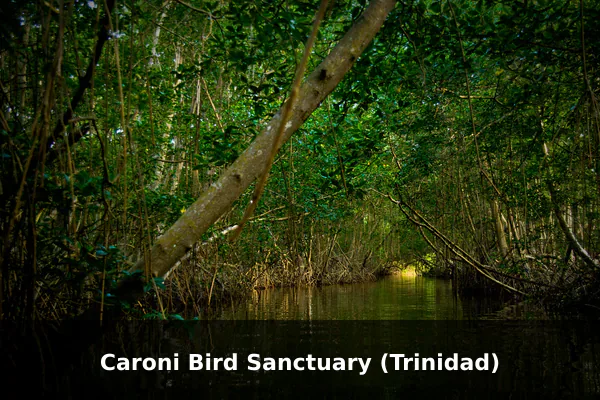
This protected mangrove wetland is one of Trinidad’s signature wildlife spectacles, where each evening flocks of Scarlet Ibis stream in to roost and turn the green canopy a vivid red. Drifting through the narrow channels by boat puts photographers at water level among the mangroves, offering reflections, soft dusk light, and the chance at dramatic flight shots as the birds gather.
On a guided tour you glide quietly past mangrove roots while spotting herons, egrets, caimans, and tree-dwelling boas before the main event at sunset, when the ibis return en masse. Because you are shooting from a slow-moving boat in fading light, the experience rewards patience and a steady setup as much as a long reach.
Travel tip: Book a licensed boat tour in advance and bring a long lens plus a beanbag or rail support, since you shoot from a moving boat at dusk.
Best time to visit: Late afternoon departures timed for the ibis return at sunset; dry season offers calmer, clearer conditions.
Ticket price: Prices vary by tour operator; pay the boat-tour fee directly to a licensed guide.
Pigeon Point Heritage Park (Tobago)
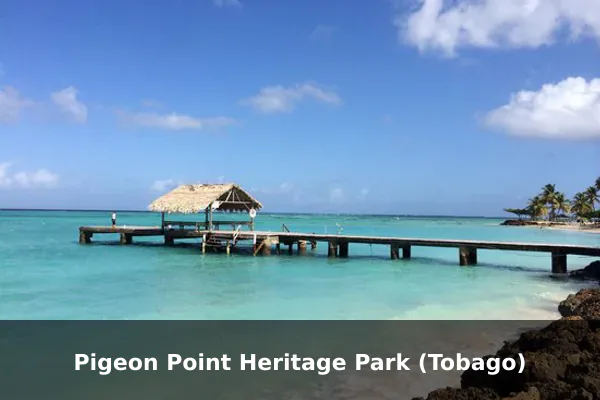
The thatched-roof jetty reaching out over pale, glassy shallows is Tobago’s most recognizable image and a near-guaranteed postcard frame. Backed by coconut palms and fringed by powdery sand, the park packs the island’s classic Caribbean beach scene into one tight, color-saturated composition that works in almost any light.
Beyond the famous jetty, visitors can photograph the shifting greens and blues of the lagoon, walk the palm-lined shore, and use the park as a launch point for reef trips out toward the Buccoo area. Arriving early gives clean water, calm reflections, and an uncluttered beach before umbrellas and swimmers fill the foreground.
Travel tip: Arrive at opening to shoot the jetty before crowds and beach chairs fill the frame; protect your gear from blowing sand and spray.
Best time to visit: Early morning for empty beach and soft light; open during daytime park hours.
Ticket price: A modest park entrance fee applies; confirm the current rate at the gate.
Main Ridge Forest Reserve (Tobago)
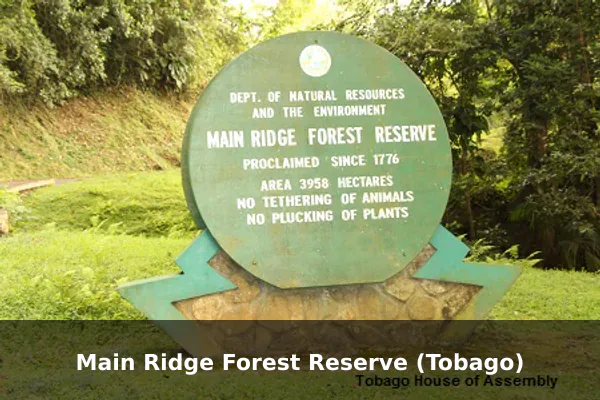
Recognized as the oldest legally protected forest reserve in the Western Hemisphere, this rainforest spine running down Tobago offers misty ridge vistas, dense layered foliage, and a soundtrack of birdsong that defines its atmosphere. The combination of elevation, cloud, and old-growth canopy gives photographers moody, depth-rich scenes very different from the island’s beaches.
Along the trails you can frame fog drifting through the canopy, capture endemic and migratory birds, and find intimate details of ferns, streams, and forest light filtering through the leaves. A knowledgeable guide helps locate wildlife and the best ridge openings, while the humidity and shifting mist constantly reshape the available shots.
Travel tip: Hire a certified nature guide and pack rain protection and lens cloths, as humidity and fog can fog optics quickly.
Best time to visit: Early morning for bird activity and atmospheric mist; trails are easiest in drier months.
Ticket price: Trail access is generally free, but guide fees vary; confirm protected-area rules with the EMA.
Argyle Waterfall (Tobago)
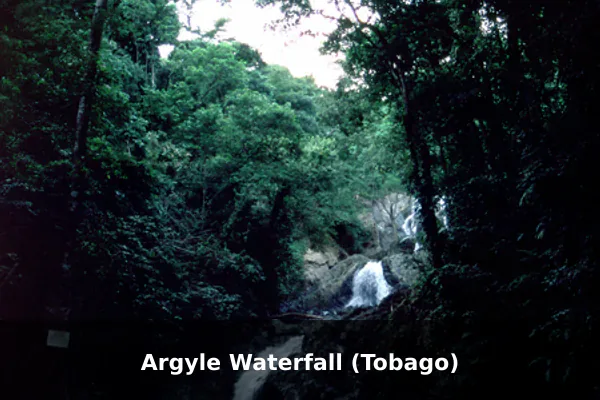
Argyle Waterfall is Tobago’s tallest cascade, tumbling down a series of stone tiers deep in lush rainforest near Roxborough. A short, shaded forest trail leads to the base, rewarding photographers with layered compositions of falling water, mossy rock, and dense green canopy that feel worlds away from the island’s beaches.
Visitors can frame the full multi-tiered drop from below or scramble to higher pools for tighter cascade studies, using slow shutter speeds to render the flow as silky ribbons. The damp gorge, ferns, and filtered light also make for atmospheric rainforest detail shots between the larger waterfall scenes.
Travel tip: Bring a tripod and ND filter for silky water, and wear grippy footwear for slick rocks; local guides are usually required at the entrance.
Best time to visit: Morning for fuller light in the gorge; flow is strongest after rain in the wet season.
Ticket price: An entrance and guide fee applies; prices vary, so confirm on arrival.
Nylon Pool and Buccoo Reef (Tobago)
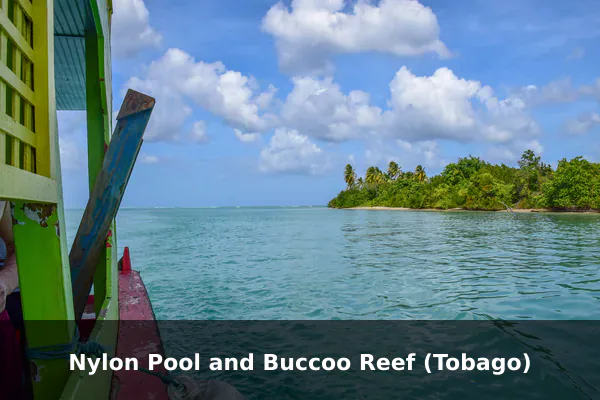
The Nylon Pool is a shallow, crystal-clear sandbar rising mid-sea over the protected Buccoo Reef, creating a band of luminous turquoise that stands out vividly against the deeper blue surroundings. Reached only by boat, it pairs naturally with the coral gardens of the reef for some of Tobago’s most striking water imagery.
Visitors can wade across the waist-deep pool for bright, color-saturated wide shots, then capture reef-edge textures and fish through clear water on the way out. Glass-bottom boat tours offer downward views of the coral, while the open sandbar gives clean horizons and reflections ideal for vibrant seascape frames.
Travel tip: Use a waterproof housing or action camera and book a reputable glass-bottom boat tour that respects reef protection rules.
Best time to visit: Midday sun for the brightest turquoise tones; calmer dry-season seas improve visibility.
Ticket price: Prices vary by boat tour operator; pay the tour fee directly.
Galera Point and Toco Lighthouse (Trinidad)
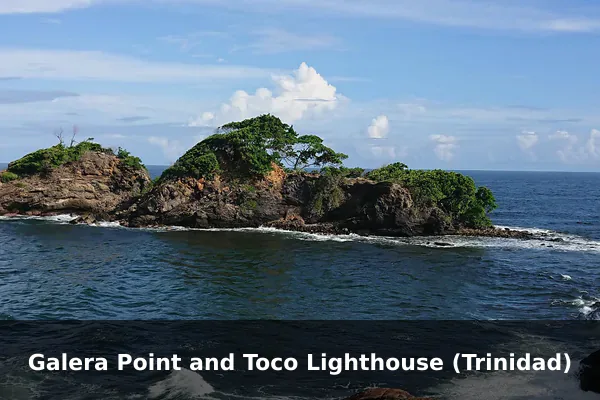
Galera Point marks Trinidad’s rugged northeastern tip, where the Atlantic Ocean meets the Caribbean Sea in a churn of crashing surf and exposed rock. A white lighthouse crowns the windswept headland, giving photographers a bold focal point set against dramatic, ever-shifting water.
Visitors can shoot the lighthouse from several angles along the grounds, then turn to the cliffs to capture waves exploding over the dark rocks. The meeting of two seas creates restless texture and spray, while the open horizon offers clean sunrise compositions on the Atlantic-facing side.
Travel tip: It is a long drive from Port of Spain, so start early and plan fuel and food stops; mind your footing near the exposed cliff edges.
Best time to visit: Sunrise for golden light on the Atlantic side; visit in calmer, drier weather for safer access.
Ticket price: Free to visit the headland and lighthouse grounds.
Pitch Lake, La Brea (Trinidad)
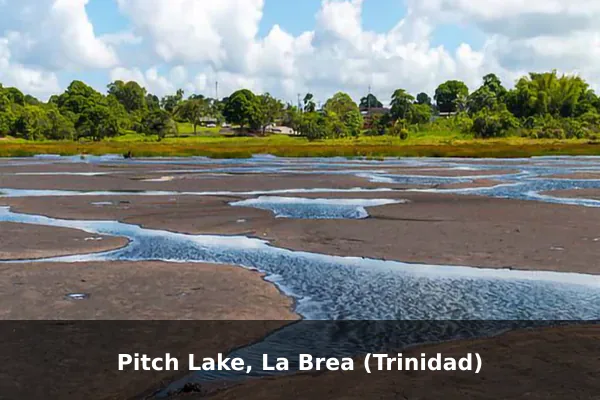
Pitch Lake in La Brea is the world’s largest natural asphalt lake, a vast expanse of grey-black tar broken by reflective rain pools and ribbon-like surface patterns. This otherworldly terrain offers a landscape unlike anything else on the islands, prized for its texture, scale, and quiet, almost lunar atmosphere.
Visitors can photograph the contrast between the matte dark crust and the mirror-like water pockets, which catch sky reflections and the occasional bloom of vegetation at the edges. Walking the lake with a guide opens up minimalist compositions of cracked surfaces, swirling mineral lines, and the wide, open plain stretching toward the horizon.
Travel tip: Take an official guide to stay on safe ground, and wear closed shoes you don't mind getting marked by tar.
Best time to visit: Morning to avoid the harshest heat reflecting off the dark surface; dry season is most comfortable.
Ticket price: An entrance and guide fee applies; confirm current rates at the visitor center.
Fort King George, Scarborough (Tobago)
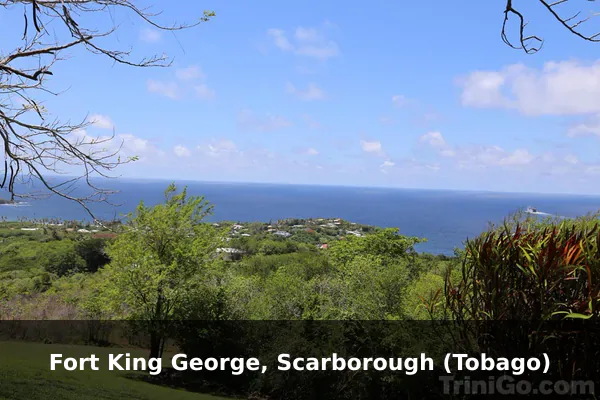
Fort King George is a restored 18th-century colonial fort set on a hill above Scarborough, combining weathered stone walls, period cannons, and manicured grounds with sweeping views over the town and coastline. The blend of heritage architecture and elevated sea vistas makes it one of Tobago’s most rewarding spots for layered, story-rich images.
Visitors can position the historic cannons and ramparts against the blue expanse of the sea for striking foreground-to-horizon compositions, or explore the on-site museum and surrounding buildings for architectural detail. The hilltop vantage also frames Scarborough’s rooftops and harbor, giving plenty of scope for wide coastal panoramas.
Travel tip: Combine your visit with the on-site museum and shoot the cannons and walls against the sea; go late afternoon for warm light.
Best time to visit: Late afternoon toward sunset for golden coastal light; open during daytime hours.
Ticket price: Generally free or a small fee for the grounds; museum entry may cost extra.
Official references
- Tourism Trinidad and Tobago (Official Tourism Authority) (tourismtrinidad.com) – Official destination tourism authority for Trinidad with attraction details, locations, and visitor logistics relevant to identifying scenic and photography spots.
- Tobago Beyond (Tobago Tourism Agency Limited) (visittobago.gov.tt) – Official Tobago tourism agency providing verified information on beaches, reefs, and scenic locations useful for accurate location and access details.
- Ministry of Tourism, Culture and the Arts – Trinidad and Tobago (tourism.gov.tt) – Government ministry overseeing national tourism, a primary source for official site information, protected areas, and travel guidance.
- Environmental Management Authority (EMA) – Trinidad and Tobago (ema.co.tt) – Authoritative source on protected natural areas, wetlands, and Environmentally Sensitive Areas (e.g., Caroni Swamp, Main Ridge Forest Reserve) relevant to scenic location accuracy and access rules.
- Immigration Division – Government of the Republic of Trinidad and Tobago (immigration.gov.tt) – Primary source for official entry requirements and visa logistics for travelers planning a photography trip.