
Bhutan is a compact Himalayan kingdom where the best journeys connect cliffside monasteries, fortress-monasteries, high mountain passes, glacial valleys, and deeply protected cultural landscapes. This plan focuses only on places inside Bhutan, with a practical route-friendly mix for first-time travelers who want more than a simple Paro-Thimphu checklist.
Visitors should factor in Bhutan’s Sustainable Development Fee, certified guide requirements for monuments and treks, and slower road travel between valleys. Spring and autumn are the most comfortable overall seasons, while winter is especially rewarding for clear mountain views and black-necked crane sightings in Phobjikha.
Paro Taktsang, Tiger's Nest Monastery
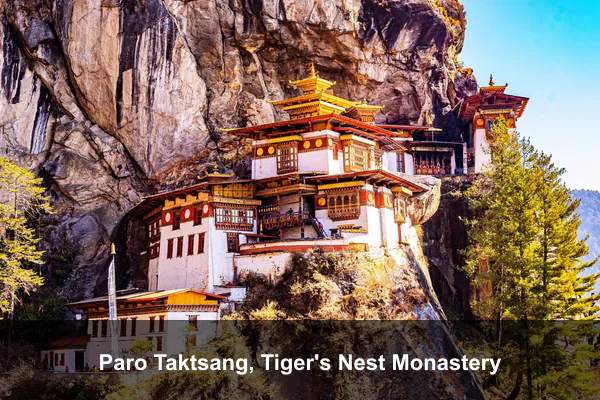
Paro Taktsang is Bhutan’s most unforgettable landmark, a whitewashed monastery clinging to a sheer cliff above the Paro Valley. Its dramatic setting, sacred history, and sense of arrival make it the natural first image of any journey through the kingdom.
Visitors follow a forested pilgrimage trail past prayer flags, pine trees, and sweeping viewpoints before reaching the monastery complex. Along the way, watch how the cliff, valley, and temple reveal themselves in stages, turning the hike into part of the experience.
Travel tip: Start early from Paro, carry water and layers, and wear modest clothing that covers shoulders and knees for the monastery visit.
Best time to visit: March-May or September-November; begin the hike around 7:00-8:00 AM to avoid midday crowds and heat.
Ticket price: About Nu 1,000 / US$12 entry; guide, transport, and daily SDF are separate.
Punakha Dzong
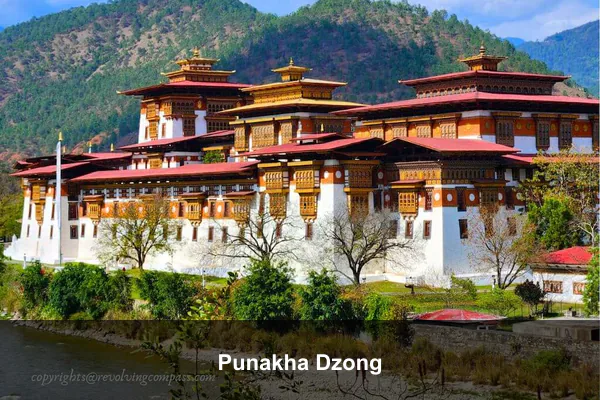
Punakha Dzong is one of Bhutan’s most graceful landmarks, set where two rivers meet beneath green hills and terraced fields. Its whitewashed walls, carved timber balconies, and golden roofs create a fortress-monastery that feels both grand and serene.
Visitors can walk through its courtyards, admire detailed murals and woodwork, and notice how the architecture frames the river valley from almost every angle. The setting is especially memorable from the approach, where the dzong appears to rise naturally from the water’s edge.
Travel tip: Combine the dzong with the nearby suspension bridge, and remove hats and sunglasses before entering temple areas.
Best time to visit: March-April for jacaranda blooms or October-November for clear weather; visit before 10:30 AM for softer light.
Ticket price: About Nu 500 / US$6 entry; guide and daily SDF are separate.
Buddha Dordenma, Thimphu
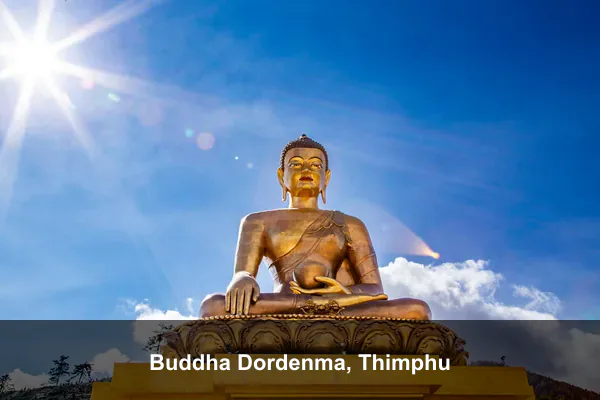
Buddha Dordenma is one of Thimphu’s most striking landmarks, rising above the capital with a calm, monumental presence. The giant gilded statue makes the hilltop feel ceremonial, but the real reward is the sweeping view across the Thimphu Valley, where forested ridges, clustered rooftops, and mountain light frame the city below.
Visitors can walk around the statue platform, notice the detailed lotus base and prayer spaces, and pause for photos from the open terraces. On clear days, the viewpoint reveals how closely Bhutan’s capital sits between tradition, terrain, and modern life.
Travel tip: Go by hired car or arranged driver, as the hilltop is not ideal for casual walking from central Thimphu.
Best time to visit: Clear mornings from October-February, or late afternoon year-round for valley views.
Ticket price: About Nu 300 / US$3.60 entry; guide and daily SDF are separate.
Tashichho Dzong, Thimphu
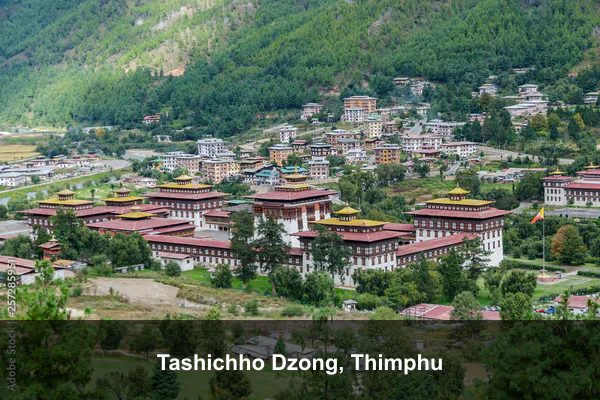
Tashichho Dzong is one of Thimphu’s most important landmarks, combining royal administration, monastic tradition, and classic Bhutanese fortress architecture in a single riverside complex. Its whitewashed walls, golden roofs, and carefully proportioned courtyards make it a clear window into how Bhutan blends civic authority with spiritual life.
Visitors can admire the dzong’s grand exterior, prayer halls, carved woodwork, and the formal rhythm of monks and officials moving through the grounds. The setting is especially rewarding for observing Bhutanese craftsmanship, ceremonial detail, and the calm dignity that defines the capital’s public face.
Travel tip: Check opening times with your guide because access can shift around government functions and religious events.
Best time to visit: September-November on weekdays; late afternoon is best for exterior photography and evening light.
Ticket price: About Nu 500 / US$6 entry; guide and daily SDF are separate.
Dochula Pass and the 108 Chortens
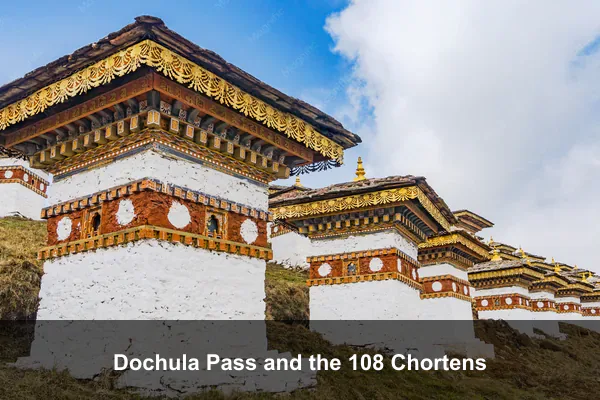
Dochula Pass is one of Bhutan’s most memorable road stops, turning the journey between Thimphu and Punakha into a scenic pause above the valleys. On clear days, the pass opens toward a sweeping Himalayan skyline, making it a rewarding place to slow down and take in Bhutan’s mountain scale.
Visitors can walk around the 108 chortens, notice their orderly ring-like arrangement, and look for prayer flags moving in the wind across the ridge. The site is especially atmospheric when clouds drift through the pass, adding a quiet, reflective mood to the mountain views.
Travel tip: Bring a warm layer even on sunny days, and ask your driver to stop only when visibility is good.
Best time to visit: October-February, especially early morning after clear nights for the best mountain visibility.
Ticket price: Free outdoor viewpoint; no standard ticket for the pass or chortens.
Phobjikha Valley and the Black-Necked Crane Center
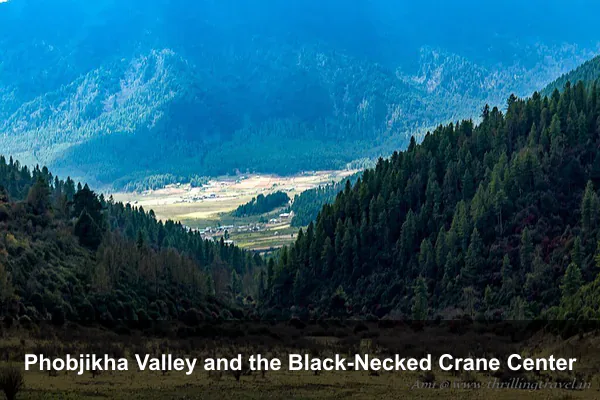
Phobjikha Valley is one of Bhutan’s most peaceful landscapes, a broad glacial basin framed by forested hills and scattered farmhouses. Its open wetlands and quiet villages make it especially memorable for travelers who want Bhutan’s softer, slower side away from busy sightseeing routes.
Visitors can follow gentle walking paths across the valley, watch rural life unfold around traditional homes, and learn about the endangered black-necked cranes at the local conservation center. The landscape rewards patience, with misty mornings, grazing animals, prayer flags, and wide views that feel calm rather than dramatic.
Travel tip: Use binoculars and stay on marked trails so crane habitat and farm fields are not disturbed.
Best time to visit: Late October-February for cranes; visit the center in the morning when visibility is usually better.
Ticket price: Valley access is free; Black-Necked Crane Center is about Nu 200 / US$2.40.
Bumthang Valley and Jambay Lhakhang
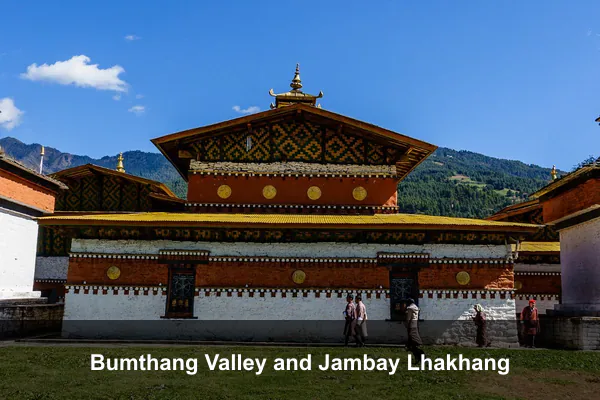
Bumthang Valley is one of Bhutan’s most atmospheric cultural regions, where forested hills, quiet villages, and centuries-old monasteries create a slower counterpoint to the country’s busier western circuit. Jambay Lhakhang gives the valley a deep spiritual anchor, with ancient architecture and ritual life that make the area feel central to Bhutanese identity.
Visitors can explore temple courtyards, follow rural lanes between traditional houses, and notice how prayer flags, farm fields, and mountain light shape the valley’s everyday rhythm. The appeal lies in taking time: Bumthang rewards unhurried walks, conversations with local guides, and visits to nearby sacred sites rather than a quick stop.
Travel tip: Plan at least two nights in Bumthang because road journeys from western Bhutan are long and weather-sensitive.
Best time to visit: March-May or September-November; mornings are best for temple visits before tour groups arrive.
Ticket price: Jambay Lhakhang is about Nu 500 / US$6; other Bumthang sites may charge separately.
Trongsa Dzong and Ta Dzong Museum
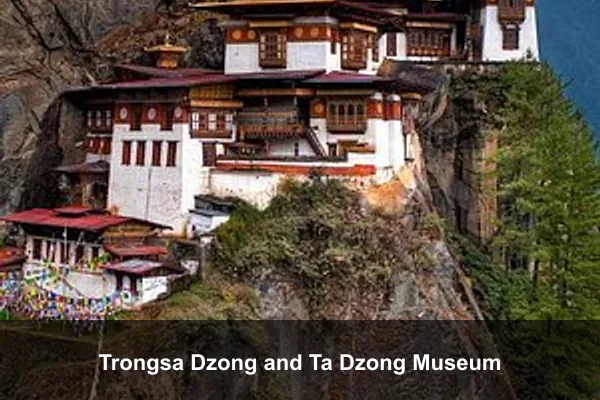
Trongsa Dzong is one of Bhutan’s most commanding fortresses, stretched across a ridge above deep valleys and historic trade routes. Its importance goes beyond scenery: the dzong is closely tied to the rise of Bhutan’s monarchy and the regional power that once shaped the country’s political heartland.
Visitors can walk through layered courtyards, stairways, temples, and administrative quarters while noticing how the fortress controls the landscape from every angle. Nearby Ta Dzong, the former watchtower, adds context through exhibits on royal history, Buddhist art, and Trongsa’s role as a strategic crossroads.
Travel tip: Break the drive between Punakha and Bumthang here rather than treating Trongsa as a rushed photo stop.
Best time to visit: October-November for clear valley views; visit the dzong first in the morning and the museum afterward.
Ticket price: About Nu 500 / US$6 each for Trongsa Dzong and Ta Dzong Museum; guide and SDF separate.
Chele La Pass and Haa Valley
Chele La Pass and Haa Valley make one of Bhutan’s most rewarding day trips from Paro, combining dramatic high-altitude scenery with the calm of a lesser-visited western valley. The route climbs through forested slopes to a wind-swept pass where wide Himalayan views give way to a slower, more rural side of the country.
Visitors can pause among prayer flags at the pass, look for distant snow peaks on clear days, and then descend into Haa Valley to notice traditional farmhouses, quiet village lanes, and pine-covered hills. The journey is as memorable as the destination, with shifting landscapes that feel far removed from Bhutan’s busier sightseeing circuit.
Travel tip: Carry windproof clothing and avoid the pass if roads are icy, foggy, or your driver advises against it.
Best time to visit: April-June for rhododendrons or October-November for mountain views; start early from Paro.
Ticket price: Free for the pass and valley viewpoints; vehicle, guide, and any temple fees vary.
Royal Manas National Park
Royal Manas National Park offers a wilder, warmer side of Bhutan, far from the highland monasteries and mountain passes that define many classic itineraries. Its subtropical forests, broad rivers, and rich biodiversity make it a standout for travelers who want to experience Bhutan as a living wilderness rather than only a cultural destination.
Visitors can look for rare birds, butterflies, orchids, and signs of larger wildlife while exploring riverbanks, forest trails, and safari routes with local guides. The landscape feels lush and layered, with humid valleys, dense canopy, and waterways that reveal how dramatically Bhutan’s climate and scenery change from north to south.
Travel tip: Book through a licensed operator in advance because permits, guides, transport, and park logistics must be arranged.
Best time to visit: November-March for drier trails, cooler weather, and better wildlife-viewing conditions.
Ticket price: Prices vary by permit, guide, boat, and safari arrangements; confirm current park fees before booking.