
Bhutan is ideal for travelers who want mountain scenery without turning every day into a hard expedition: high passes, glacial valleys, crane wetlands, rhododendron forests, and subtropical national parks all fit within one compact Himalayan kingdom.
This plan takes a nature-first angle, avoiding a broad general sightseeing list and focusing on outdoor places and scenic experiences that help readers choose where to hike, photograph, slow down, and travel responsibly with current Bhutan visitor rules in mind.
Chele La Pass and Kila Nunnery Ridge Walk
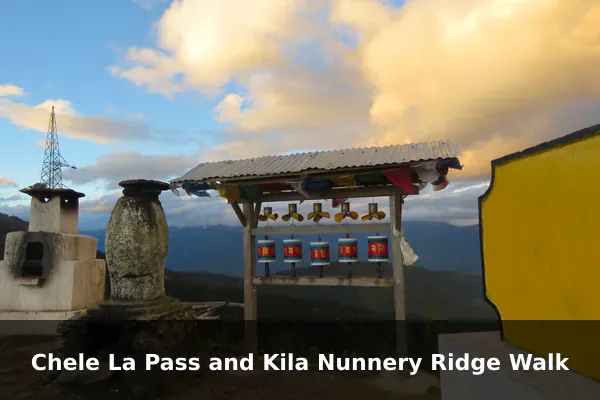
Chele La Pass is one of the highest motorable points in Bhutan, sitting on the ridge between Paro and Haa valleys and offering wide Himalayan panoramas that can stretch toward sacred peaks like Jomolhari and Jichu Drake on clear days. The setting feels both ceremonial and wild, with prayer flags strung across windswept saddles and forested slopes dropping steeply on either side, which makes it a meaningful stop for travelers who want elevation and sweeping scenery without a long trek.
From the pass, many visitors continue on the ridge walk down toward Kila Nunnery, one of the oldest nunneries in Bhutan, where small white-washed dwellings cling to the cliffs above the forest. Along the way, walkers can take in alpine meadows, rhododendron and fir cover in season, distant valley views, and quiet moments at chortens and prayer-flag clusters that mark the route.
Travel tip: Arrange a vehicle and certified guide in advance, bring a warm layer even on sunny days, and avoid rushing because the pass sits at high elevation.
Best time to visit: October to November for clear mountain views, or March to May for spring color; aim for morning before clouds build.
Ticket price: No standard pass entry fee is usually charged, but guide, vehicle, visa or permit, and SDF costs apply.
Dochula Pass and Lamperi Rhododendron Trails
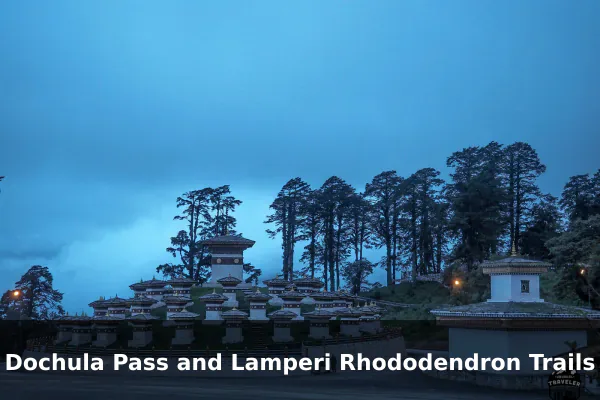
Dochula Pass is a popular roadside viewpoint on the route between Thimphu and Punakha, known for the 108 Druk Wangyal Chortens arranged on a low hill and for its sweeping outlook toward the eastern Himalayan range on clear mornings. Just down the road, the Royal Botanical Park at Lamperi protects a band of mid-elevation forest that is especially rich in rhododendron species, making the pair a strong combination of cultural scenery and accessible nature.
Visitors can wander among the chortens, photograph the layered ridgelines, and step into the small Druk Wangyal Lhakhang nearby, then drive a short distance to Lamperi for gentle forest trails through rhododendron stands, oak, and hemlock. The botanical park also has interpretive signage and a small lake area that suits relaxed walking, birding pauses, and a quieter contrast to the busier pass.
Travel tip: Stop early on the drive to Punakha, then continue to Royal Botanical Park Lamperi for a quieter forest walk away from the main viewpoint crowds.
Best time to visit: March to May for rhododendrons, or late autumn and winter mornings for clearer long-distance views.
Ticket price: Dochula viewpoint is generally free; Lamperi park or nature-area fees may vary, so confirm locally with your guide.
Phobjikha Valley and Gangtey Nature Trail
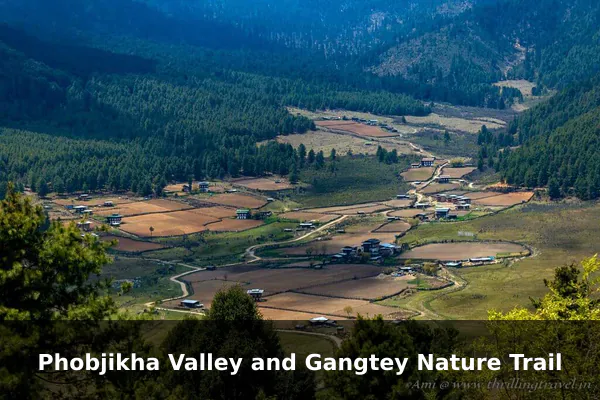
Phobjikha is a broad glacial valley in central Bhutan that feels notably calm, with open wetlands, scattered farmhouses, and pine-edged slopes rising on either side. It is best known as a wintering ground for the endangered black-necked crane, and the surrounding community has shaped its tourism around low-impact visits, which gives the valley a slower, conservation-minded character that stands out even by Bhutanese standards.
The Gangtey Nature Trail offers an easy way to take in this landscape on foot, descending from the ridge near Gangtey Monastery through pine forest and farmland to the valley floor. Walkers can observe seasonal birdlife, look across the wetlands toward grazing cattle and crop fields, and visit the Black-Necked Crane Information Centre to learn how the valley’s habitat is managed.
Travel tip: Keep distance from black-necked crane roosting areas and use binoculars instead of walking into wetlands or farm fields.
Best time to visit: Late October to February for crane season; mornings and late afternoons offer softer light and calmer walking conditions.
Ticket price: The nature trail is generally free, while local conservation, guide, transport, and accommodation costs vary.
Jomolhari Trek in Jigme Dorji National Park
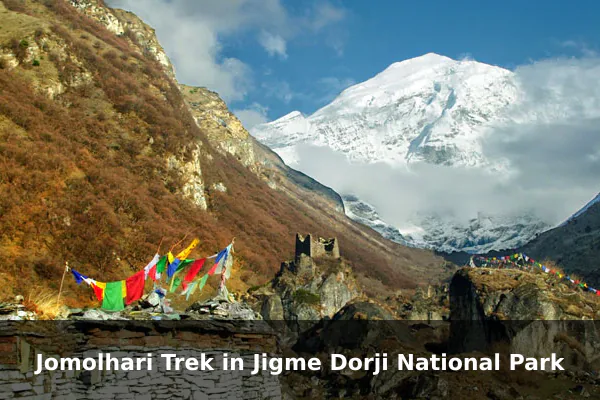
The Jomolhari Trek is one of Bhutan’s signature high-Himalayan routes, leading travelers through Jigme Dorji National Park toward base-camp areas beneath the sacred peak of Jomolhari. It is valued for its mix of remote alpine terrain, traditional yak-herding communities, and views of glaciated mountains that are difficult to reach by any other means, which makes it a strong choice for visitors who want a multi-day wilderness experience within Bhutan’s regulated tourism framework.
Along the route, trekkers pass through pine and rhododendron forest, cross suspension bridges, camp near high pastures, and reach viewpoints with broad outlooks toward Jomolhari and neighboring peaks. The trail also goes by old dzong ruins, seasonal herder camps, and high passes where prayer flags mark the route, giving each day a steady mix of mountain scenery and cultural texture.
Travel tip: Book through an accredited operator, allow acclimatization days, and pack for cold nights even outside winter.
Best time to visit: April to June and September to November; avoid the main monsoon period when trails can be muddy and views reduced.
Ticket price: Prices vary by operator, trek length, camping setup, park permits, guide services, and required Bhutan visitor fees.
Bumdeling Wildlife Sanctuary Crane and Butterfly Valleys
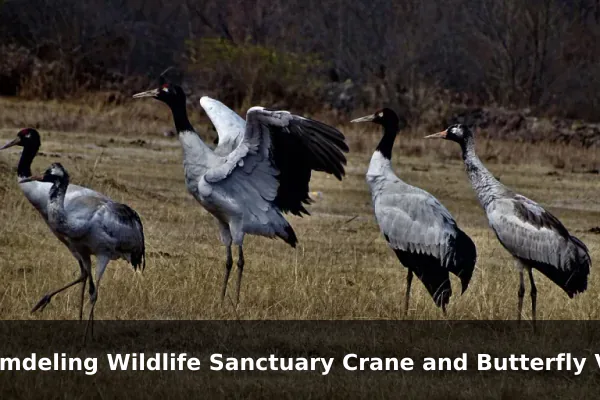
Bumdeling Wildlife Sanctuary sits in eastern Bhutan and protects a mosaic of river valleys, wetlands, and forested ridges that support a wide range of wildlife, including wintering black-necked cranes and rare butterflies such as Ludlow’s Bhutan Glory. Because the east receives fewer visitors than western Bhutan, the sanctuary suits travelers looking for a quieter ecotourism experience with strong birding and nature-watching potential.
Within the sanctuary, visitors can explore valley walks around Bumdeling, scan riverside wetlands for cranes in season, and look for butterflies, songbirds, and forest mammals in the surrounding woodland. Local guides can help arrange viewpoints, community visits, and short hikes that connect protected habitat with nearby villages, giving the trip a balanced mix of nature and culture.
Travel tip: Plan extra travel time because eastern Bhutan distances are slow, and ask your guide to coordinate local birding or butterfly-viewing conditions before arrival.
Best time to visit: November to February for wintering cranes, or August to September for better chances of seeing Ludlow’s Bhutan Glory butterflies.
Ticket price: Protected-area permits are required for national parks and sanctuaries; permit and guide costs vary by itinerary.
Sakteng Wildlife Sanctuary and Merak-Sakteng Highlands
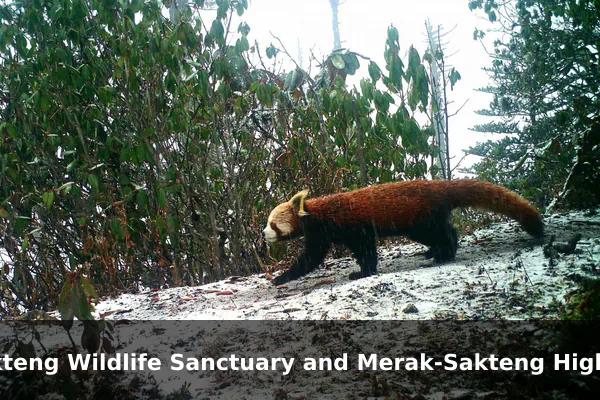
Sakteng Wildlife Sanctuary in far-eastern Bhutan is worth visiting because it pairs protected alpine landscapes with the cultural world of the Brokpa, a semi-nomadic community whose yak-herding life shapes the highland scenery. The remoteness keeps crowds low, so the rhododendron slopes, conifer ridges, and wide grazing meadows feel unhurried and genuinely off the standard western Bhutan circuit.
Visitors typically trek between Merak and Sakteng villages on multi-day routes, pausing at stone-and-timber houses, prayer walls, and seasonal yak camps. Along the way travelers can notice traditional Brokpa dress, taste local dairy products, watch for high-altitude birdlife, and observe how families move livestock with the seasons across these eastern highlands.
Travel tip: Use a licensed operator familiar with eastern Bhutan logistics, and carry rain protection because weather can shift quickly in the highlands.
Best time to visit: April to June and September to October for trekking comfort and better trail conditions.
Ticket price: Prices vary by operator, homestay or camping choice, transport distance, protected-area permits, and guide arrangements.
Phrumsengla National Park and Thrumshing La Pass
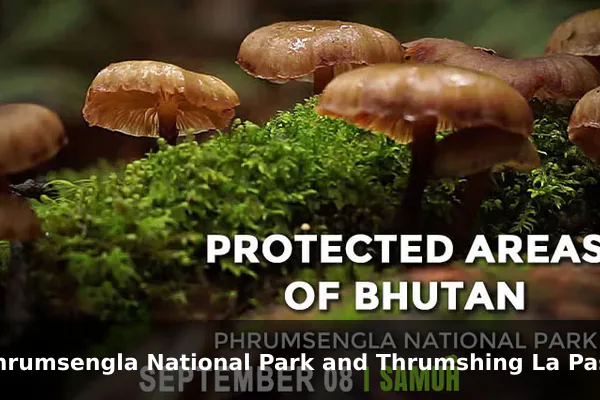
Phrumsengla National Park and the road crossing of Thrumshing La are worth visiting because they compress an unusual range of central-Bhutan landscapes into a single drive, moving from temperate broadleaf forest through moss-draped cloud forest to one of the country’s higher motorable passes. The route is also a recognized birding corridor, which adds a quiet, naturalist appeal beyond the obvious mountain views.
Travelers can stop at marked viewpoints to take in layered ridgelines, watch prayer flags above the pass, and notice how vegetation shifts with altitude over short distances. Short forest pull-offs offer a chance to listen for Himalayan bird species, while the descents toward Bumthang or Mongar reveal terraced fields and scattered villages that frame the journey.
Travel tip: Build this into a central-to-eastern Bhutan route rather than a rushed day detour, and keep motion-sickness medication handy for winding roads.
Best time to visit: October to December for clearer roads and views, or April to May for forest blooms; travel in daylight only.
Ticket price: Road viewpoints are generally free, while park-related activities or permits may vary and should be confirmed locally.
Royal Manas National Park River and Forest Experience
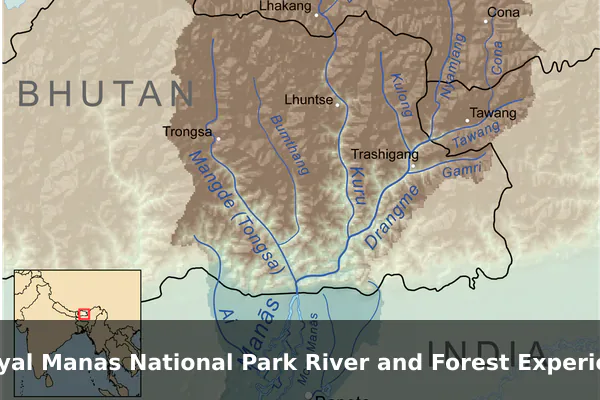
Royal Manas National Park is worth visiting because it shows a side of Bhutan that travelers rarely associate with the country: warm subtropical lowlands, broad river systems, and dense forest rich in wildlife. As Bhutan’s oldest national park and a key transboundary conservation area, it offers a striking contrast to the alpine valleys most itineraries focus on.
With a permitted operator, visitors can take river excursions, walk forest trails, and join guided birding sessions where hornbills, kingfishers, and other lowland species are commonly noted. The park is also known for elusive mammals such as tigers, elephants, and golden langurs, so guided nature drives and quiet observation points are usually the main way to engage with the landscape responsibly.
Travel tip: Visit with an operator experienced in park access and wildlife etiquette, and bring light long sleeves, insect repellent, and dry bags.
Best time to visit: November to March for cooler weather and better outdoor comfort; avoid peak monsoon conditions when access can be harder.
Ticket price: Protected-area permits and guided activity fees vary; confirm current park access and costs before booking.
Ura Valley Meadows and Forest Walks
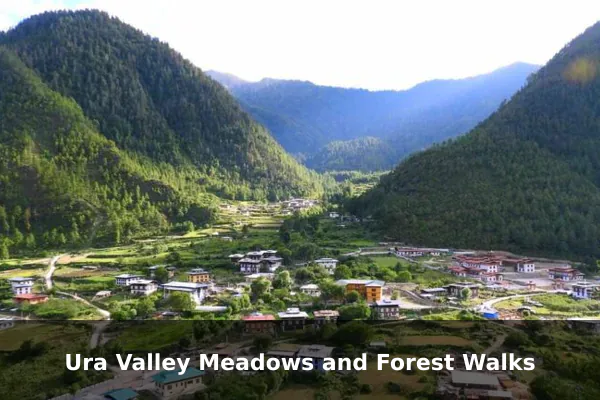
Ura Valley is worth visiting because it offers one of central Bhutan’s most photogenic high-valley settings, with clustered stone houses, a central temple, and wide pastures framed by forested ridges. It feels lived-in rather than staged, which makes it a rewarding stop for travelers who want quiet walks and a sense of traditional Bumthang-region village life.
Visitors can stroll between buckwheat and potato fields, follow gentle forest paths into nearby woodland, and notice traditional weaving, dairy work, and seasonal harvests as they pass through. In late summer, matsutake mushroom foraging and related local events draw attention, while autumn brings clear light that suits unhurried photography and meadow walking.
Travel tip: Combine Ura with a Bumthang stay rather than treating it as a quick photo stop, and dress modestly if village or temple visits are included.
Best time to visit: April to June for green landscapes, August for matsutake-focused local experiences, and October for crisp walking weather.
Ticket price: Village and meadow walks are usually free, while festival, homestay, guide, transport, and special activity prices vary.
Nabji-Korphu Community Trek in Jigme Singye Wangchuck National Park
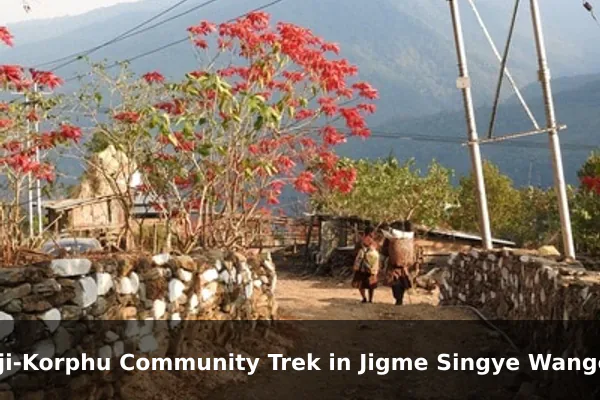
The Nabji-Korphu Community Trek is worth visiting because it offers a gentler, lower-altitude trekking experience inside one of Bhutan’s largest protected areas, making it a strong choice for travelers who want a real multi-day walk without the demands of high-pass routes. It is also a community-based circuit, so trekking fees and homestay stays directly support the villages along the trail.
Walkers can move between subtropical forest, terraced fields, and small settlements such as Nabji and Korphu, with cultural stops at chortens and village temples. The route is known for birding, possible sightings of golden langurs and other forest wildlife, and warm interactions with host families who provide meals and shelter at simple community lodges.
Travel tip: Choose this route if you want a nature trek with less altitude stress, and book early because community-based lodging and support can be limited.
Best time to visit: October to March, especially winter, when the lower altitude is comfortable and many higher treks are colder.
Ticket price: Prices vary by operator, community services, guide, camping or homestay setup, and protected-area permit requirements.
Official references
- Bhutan Travel – Official Tourism Portal – Primary tourism-board source for Bhutan trip planning, destination framing, entry points, travel services, and current visitor guidance.
- Bhutan Travel – Visa – Official source for tourist visa/permit process, Sustainable Development Fee, fees, and entry requirements.
- Bhutan Travel – FAQs – Useful for practical rules such as guide requirements, trekking logistics, route permits, SDF details, payments, and visitor services.
- Bhutan Tourism Services Portal – Official listings for approved tourism services, including licensed guides, operators, hotels, and related travel providers.
- Department of Tourism, Royal Government of Bhutan – Government source for tourism rules, policy notices, regulations, and official tourism-sector documents.
